

Hey there! I'm a supplier in the dashboard mould production business. Over the years, I've faced my fair share of challenges in this field. In this blog, I'll share some of the major hurdles we encounter in dashboard mould production and how we deal with them.
1. Design Complexity
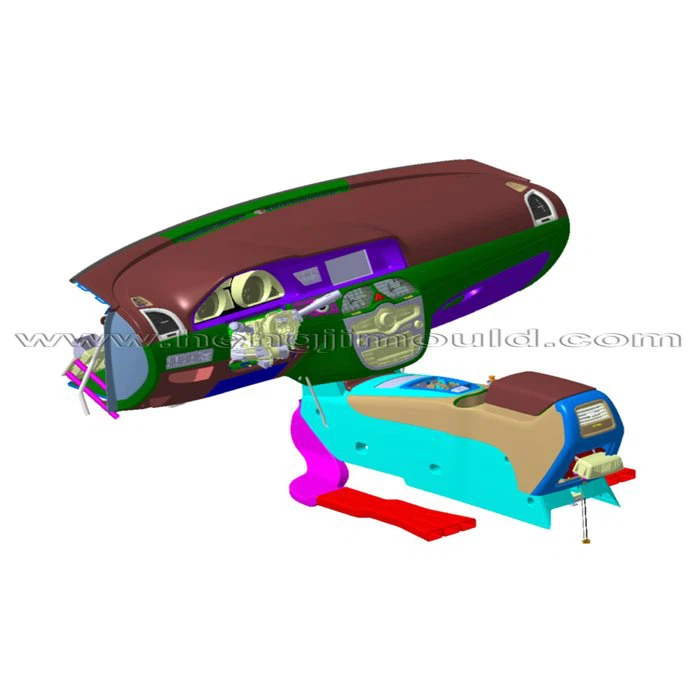
Dashboard designs are getting more and more intricate. Automakers are constantly looking for ways to make dashboards more user - friendly, aesthetically pleasing, and technologically advanced. This means that as a dashboard mould supplier, we have to deal with complex geometries.
For example, modern dashboards often feature curved surfaces, multiple compartments for different functions like glove boxes, and integrated electronic components. These complex shapes are a nightmare to replicate in a mould. The precision required to ensure that every curve and edge is accurate is extremely high. If there's even a slight deviation in the mould design, it can lead to problems with the final dashboard product.
To tackle this, we use advanced 3D modeling software. This helps us to create detailed digital models of the dashboard and the mould. We can simulate the injection molding process in the virtual environment, identify potential issues, and make adjustments before actually starting the production of the mould. You can learn more about the types of moulds we offer at IP Plastic Mould.
2. Material Selection
Choosing the right material for the dashboard mould is crucial. The material has to be able to withstand high pressures and temperatures during the injection molding process. It also needs to have good wear resistance because the mould will be used repeatedly to produce a large number of dashboards.
There are several types of materials available, such as tool steel, aluminum, and beryllium - copper alloys. Each material has its own pros and cons. Tool steel is very strong and durable, but it's also heavy and can be expensive. Aluminum is lightweight and has good thermal conductivity, but it may not be as strong as tool steel. Beryllium - copper alloys offer a good balance of strength and thermal conductivity, but they can be toxic if not handled properly.
We have to carefully evaluate the requirements of each project to select the most suitable material. Sometimes, we even use a combination of materials to get the best of both worlds. For instance, we might use a high - strength steel for the core and cavity of the mould, while using aluminum for the surrounding structure to reduce weight. Check out Dashboard Injection Mould to see how material selection impacts the final product.
3. Precision Machining
Once the design is finalized and the material is selected, the next step is precision machining. Machining the mould to the required specifications is a time - consuming and challenging process. We need to use high - precision machining tools, such as CNC (Computer Numerical Control) machines.
These machines are programmed to cut and shape the material with extreme accuracy. However, even with the best machines, there can be issues. For example, the cutting tools can wear out over time, which can affect the precision of the machining. Also, the material can sometimes have internal stresses that cause it to deform during the machining process.
To overcome these problems, we regularly maintain and calibrate our machining tools. We also perform stress - relieving treatments on the material before machining to reduce the risk of deformation. And we have a strict quality control process in place to ensure that every part of the mould meets the required tolerances. You can find more information about our precision machining techniques at IP Moulding Tool.
4. Surface Finish
The surface finish of the dashboard mould is extremely important. A smooth surface finish is required to ensure that the final dashboard has a good appearance and is free of defects. Any scratches, pits, or unevenness on the mould surface will be transferred to the dashboard during the injection molding process.
Achieving a high - quality surface finish is not easy. It involves a series of processes, such as polishing, grinding, and electroplating. Polishing is a labor - intensive process that requires skilled workers to use different grades of abrasive materials to gradually smooth the surface. Electroplating can be used to improve the hardness and corrosion resistance of the surface, as well as to enhance its smoothness.
We have a team of experienced technicians who are experts in surface finishing. They follow strict procedures to ensure that the surface finish of the mould meets the highest standards.
5. Cost Management
Cost is always a major concern in any business, and dashboard mould production is no exception. The cost of raw materials, machining, labor, and quality control can add up quickly. As a supplier, we need to find ways to keep our costs down without sacrificing the quality of the mould.
One way we do this is by optimizing our production processes. We look for ways to reduce waste, improve efficiency, and increase productivity. For example, we might use advanced nesting software to optimize the cutting of the raw material, which can reduce the amount of scrap. We also invest in training our employees to improve their skills and productivity.
Another strategy is to build long - term relationships with our suppliers. By buying raw materials in bulk and negotiating favorable contracts, we can get better prices and reduce our overall costs.
6. Time Constraints
In the automotive industry, time is of the essence. Automakers often have tight production schedules, and they need the dashboard moulds to be delivered on time. This means that we have to manage our production time effectively.
There are many factors that can cause delays in dashboard mould production. Design changes, machining issues, and quality control problems can all eat into our production time. To deal with these issues, we have a project management system in place. We set clear deadlines for each stage of the production process and closely monitor the progress.
We also have a contingency plan in case of unexpected problems. For example, if a machining tool breaks down, we have spare parts on hand and a team of technicians who can quickly repair it to minimize the downtime.
Conclusion
Dashboard mould production is a complex and challenging business. From dealing with design complexity to managing costs and time, there are many hurdles to overcome. But with the right technology, expertise, and strategies, we're able to produce high - quality dashboard moulds that meet the needs of our customers.

If you're in the market for dashboard moulds and want to discuss your specific requirements, I'd love to have a chat with you. Whether you're an automaker looking for a reliable supplier or a business involved in the automotive industry, we can work together to find the best solutions for your dashboard mould needs.
References
- Automotive Manufacturing Handbook
- Plastics Injection Molding Technology Guide
- Precision Machining Best Practices Manual


