

As a grille mould supplier, I've had the privilege of working closely with various industries that rely on high - quality grille moulds. Over the years, I've come to understand the critical toughness requirements that these moulds must meet to ensure optimal performance and longevity. In this blog, I'll discuss the toughness requirements for a grille mould, drawing on my practical experience in the field.
Understanding Toughness in Grille Moulds
Toughness in a grille mould refers to its ability to withstand the stresses and strains associated with the injection - moulding process. During injection moulding, the mould is subjected to high pressures, rapid temperature changes, and mechanical forces. A tough grille mould can resist cracking, chipping, and deformation under these harsh conditions, ensuring that it produces consistent, high - quality grille parts over an extended period.
Mechanical Stress Resistance
One of the primary toughness requirements for a grille mould is its ability to resist mechanical stress. When molten plastic is injected into the mould cavity at high pressure, it exerts a significant force on the mould walls. The mould must be able to withstand this pressure without deforming or cracking. This requires a material with high tensile strength and good ductility.
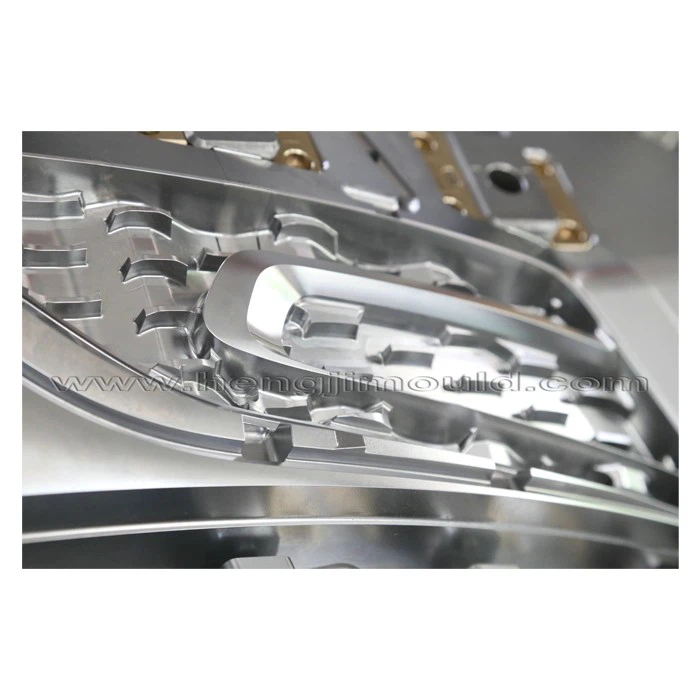
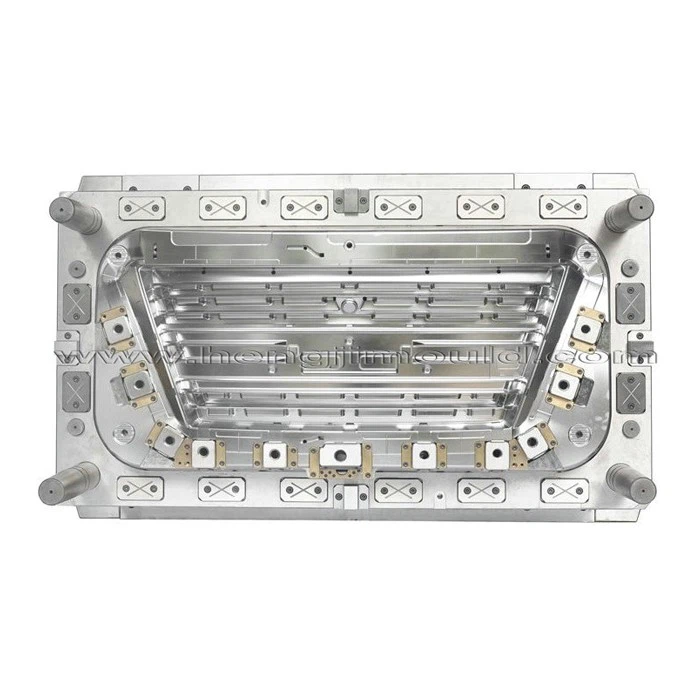
For example, in the automotive industry, grille parts often have complex geometries. The moulds used to produce these grilles need to be able to handle the uneven distribution of pressure during the injection process. A mould made from a high - strength alloy steel, such as P20 or H13, can provide the necessary mechanical toughness. These materials have excellent resistance to the high - pressure forces exerted during injection moulding, reducing the risk of premature failure.
Thermal Stress Resistance
In addition to mechanical stress, grille moulds are also exposed to rapid temperature changes. The molten plastic enters the mould at a high temperature, and then the mould is cooled to solidify the plastic. This cycle of heating and cooling can cause thermal stress within the mould.
A tough grille mould must be able to withstand these thermal stresses without warping or cracking. Materials with low thermal expansion coefficients are preferred for grille moulds. For instance, some advanced tool steels have been engineered to have minimal thermal expansion, ensuring dimensional stability during the heating and cooling cycles. This is crucial because any dimensional changes in the mould can lead to defective grille parts.
Wear Resistance
Wear resistance is another important aspect of toughness for grille moulds. As the plastic flows through the mould cavity, it can cause abrasion on the mould surface. Over time, this abrasion can lead to surface roughness and dimensional changes, affecting the quality of the grille parts.
To enhance wear resistance, grille moulds can be treated with special coatings. For example, a titanium nitride (TiN) coating can significantly improve the surface hardness of the mould, reducing wear and extending its service life. This coating acts as a protective layer, preventing the plastic from directly contacting the mould surface and minimizing abrasion.
Fatigue Resistance
Grille moulds are used in repetitive injection - moulding processes. Each cycle subjects the mould to a certain amount of stress, and over time, this can lead to fatigue failure. Fatigue resistance is the ability of the mould to withstand repeated loading without cracking.
A well - designed grille mould should have a proper heat - treatment process to improve its fatigue resistance. Heat treatment can refine the grain structure of the mould material, making it more resistant to the initiation and propagation of cracks. Additionally, the design of the mould, including the shape of the cavities and the gating system, can also affect its fatigue resistance. A well - balanced gating system can ensure uniform filling of the mould cavity, reducing the stress concentration and minimizing the risk of fatigue failure.
Chemical Resistance
Depending on the type of plastic used for grille production, the mould may be exposed to various chemicals. Some plastics may contain additives or release agents that can react with the mould material over time. A tough grille mould should have good chemical resistance to prevent corrosion and surface degradation.
Stainless steels are often used in grille moulds due to their excellent chemical resistance. They can withstand the chemical attack from a wide range of plastics, ensuring the long - term integrity of the mould surface. This is especially important in applications where the grille parts are exposed to harsh environmental conditions, as the mould needs to maintain its quality throughout the production process.
The Importance of Meeting Toughness Requirements
Meeting the toughness requirements for grille moulds is essential for several reasons. Firstly, it ensures the quality of the grille parts. A tough mould can produce consistent, high - precision grille parts with smooth surfaces and accurate dimensions. This is crucial for industries such as automotive and consumer electronics, where the appearance and functionality of the grille parts are of high importance.
Secondly, a tough grille mould has a longer service life. This reduces the frequency of mould replacement, which can save significant costs for manufacturers. By investing in a high - quality, tough grille mould, companies can improve their production efficiency and reduce downtime associated with mould maintenance and replacement.
Our Grille Mould Solutions
As a grille mould supplier, we understand the importance of meeting these toughness requirements. We offer a range of grille mould solutions, including Grille Injection Moulding, Cowl Grille Mould, and Grille Mould Tool.
Our team of experts carefully selects the materials for our grille moulds based on the specific requirements of each project. We use advanced manufacturing techniques, such as precision machining and heat treatment, to ensure that our moulds have the highest level of toughness. Whether you need a mould for a simple grille design or a complex automotive grille, we can provide a solution that meets your needs.
Contact Us for Your Grille Mould Needs
If you're looking for a reliable grille mould supplier, we'd love to hear from you. Our experience in the industry and commitment to quality make us a trusted partner for grille mould production. We can work closely with you to understand your specific requirements and provide customized solutions.
Contact us today to start a discussion about your grille mould project. We're ready to help you achieve the best results in grille production.
References
- "Tool and Die Making Handbook" by Peter H. Langen.
- "Injection Molding Handbook" by O. Olugboji and A. A. Adewale.
- Technical literature from steel manufacturers on materials for mould making.


