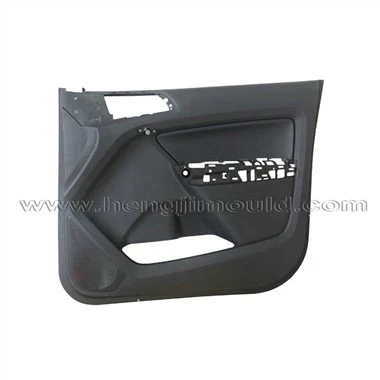
Hey there! As a long - time bumper mould supplier, I've seen firsthand how important proper inspection methods are for these crucial tools. Bumper moulds are used to create the bumpers that are essential parts of vehicles, and ensuring the moulds are in top - notch condition is key to producing high - quality bumpers. Let's dig into the different inspection methods we use.
Visual Inspection
The most basic yet indispensable inspection method is the visual one. This is pretty much the first step in our quality control process. We look at the entire bumper mould with a keen eye. I mean, it's like giving the mould a full - body checkup.
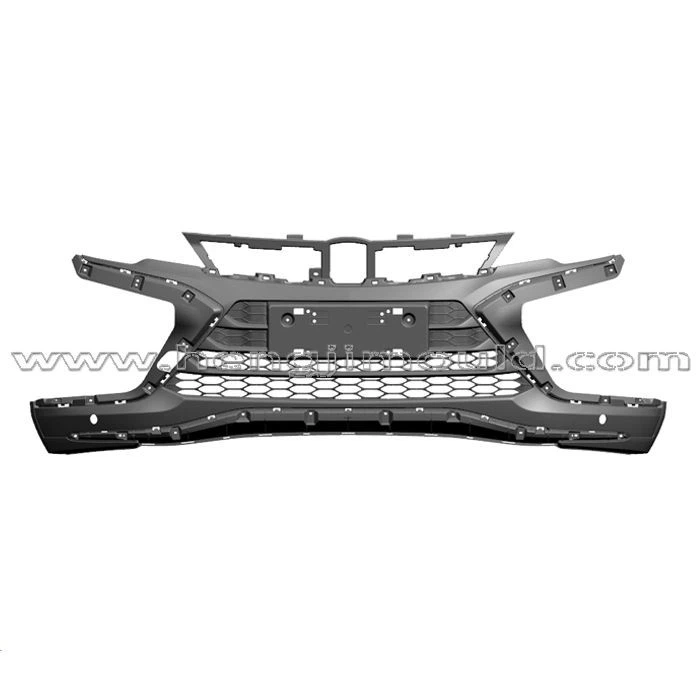
We check for any obvious signs of damage, like cracks or chips. Even a small crack can cause big problems during the moulding process. It can lead to imperfections on the bumper, such as rough edges or inconsistent shapes. And when you're making Front Bumper Mould that need to fit precisely on the vehicle, these imperfections are a no - go.
We also examine the surface finish of the mould. A smooth surface is necessary for getting a smooth finish on the bumper. Any scratches or unevenness on the mould's surface will be transferred to the bumper, making it look unprofessional. So, we run our hands along the mould and look closely under good lighting to spot any surface irregularities.
Dimensional Inspection
Bumper moulds need to be extremely accurate when it comes to dimensions. After all, the bumpers they produce must fit perfectly on different vehicle models. We use a variety of tools for dimensional inspection.
One common tool is the caliper. It's a simple yet effective device that allows us to measure the thickness, width, and length of different parts of the mould. By comparing these measurements with the design specifications, we can quickly tell if the mould is within the acceptable tolerance range.
For more complex shapes and internal dimensions, we rely on coordinate measuring machines (CMMs). These high - tech machines use a probe to measure points on the surface of the mould and create a 3D model. This way, we can get extremely accurate measurements of every nook and cranny of the Bumper Plastic Mould. If there are any deviations from the design, we can identify them and take corrective action.
Material Inspection
The material of the bumper mould plays a huge role in its performance and longevity. We use a couple of methods to inspect the material.
Spectroscopy is one way. This technique allows us to analyze the chemical composition of the mould material. We want to make sure the material has the right combination of elements, as this affects its strength, hardness, and corrosion resistance. For example, if the carbon content in a steel mould is too high or too low, it can make the mould more brittle or less durable.
Hardness testing is another important part of material inspection. We use a hardness tester to measure how hard the mould material is. Different materials have different optimal hardness levels for bumper moulds. If the material is too soft, it can wear out quickly during the moulding process. On the other hand, if it's too hard, it might be more prone to cracking.
Functional Inspection
Just having a visually good - looking and dimensionally accurate mould isn't enough. The mould has to work properly in the production process. That's where functional inspection comes in.
We test the mould's ability to open and close smoothly. This might seem like a no - brainer, but if the mould doesn't open and close properly, it can't produce bumpers efficiently. We check the alignment of the mould halves and the movement of any sliding parts.
We also test the injection process. We use a small amount of material to see how it fills the Bumper Molding. The material should flow evenly through all the cavities of the mould without any blockages or air pockets. If there are issues with the injection process, it could mean there are problems with the design of the mould's runners or gates.
Non - destructive Testing (NDT)
In addition to the above methods, we also use non - destructive testing techniques. These are great because they allow us to check for internal flaws in the mould without damaging it.
Ultrasonic testing is one such method. It uses high - frequency sound waves to detect any internal cracks or voids in the mould. The sound waves travel through the material, and when they hit a flaw, they bounce back. By analyzing these echoes, we can determine the size and location of the flaw.
Magnetic particle testing is used for ferromagnetic materials. We apply a magnetic field to the mould and then sprinkle magnetic particles on the surface. If there are any surface or near - surface cracks, the magnetic field will be disrupted, and the particles will gather at the crack site, making it visible to us.

Documentation and Record - Keeping
Throughout all these inspection processes, we maintain detailed documentation. We record every measurement, test result, and any issues we find. This documentation is super important for a few reasons.
First, it helps us with quality control. We can use the data to identify trends. For example, if we keep seeing the same type of dimensional deviation in multiple moulds, we can look into the manufacturing process to find out what's going wrong.
Second, it provides evidence of our quality assurance to our customers. When they ask for details about the mould's quality, we can show them the detailed inspection records.
Regular Maintenance and Re - inspection
Bumper moulds go through a lot during the production process. They're constantly exposed to high temperatures, pressures, and chemical reactions. So, regular maintenance is crucial.
After a certain number of production cycles, we schedule a re - inspection of the mould. This is similar to the initial inspection but with more attention to areas that are prone to wear and tear. We might find that some parts of the mould need to be repaired or replaced to keep it in good working condition.
In conclusion, the inspection methods we use for bumper moulds are a comprehensive set of processes that ensure the quality and performance of these important tools. From visual checks to high - tech non - destructive testing, each method has its own role in maintaining the high standards we set for our Bumper Plastic Mould.
If you're in the market for high - quality bumper moulds, or if you have any questions about our inspection processes or products, don't hesitate to reach out and start a procurement discussion. We're here to help you find the perfect mould solutions for your needs.
References
- ASM Handbook, Volume 17: Non - destructive Evaluation and Quality Control
- Tooling and Manufacturing Association International's Guidelines for Mould Inspection