

What are the international standards for grille moulds?
As a grille mould supplier deeply involved in the industry, I've witnessed firsthand the critical role that international standards play in ensuring the quality, safety, and performance of grille moulds. In this blog post, I'll delve into the key international standards that govern grille moulds, their significance, and how they impact our business.
ISO Standards
The International Organization for Standardization (ISO) sets a series of standards that are widely recognized and adopted globally. For grille moulds, ISO 9001:2015 is of paramount importance. This standard focuses on quality management systems. It requires that our company, as a grille mould supplier, establish, implement, maintain, and continually improve a quality management system. This includes processes for design, production, inspection, and after - sales service.
By adhering to ISO 9001:2015, we can ensure that every grille mould we produce meets the specified requirements. It also provides a framework for us to enhance customer satisfaction. For example, we have to document our processes thoroughly, which allows for better traceability. If a customer has an issue with a grille mould, we can easily track back through our records to identify where the problem might have occurred, whether it's in the design phase, material selection, or production process.
ISO 14001:2015 is another significant standard. It pertains to environmental management systems. In the production of grille moulds, we use various materials and manufacturing processes that can have an impact on the environment. This standard requires us to identify and control our environmental aspects, such as waste management, energy consumption, and emissions. By implementing an ISO 14001 - compliant system, we can reduce our environmental footprint. For instance, we can optimize our production processes to minimize waste generation, recycle materials where possible, and use energy - efficient equipment.
ASTM Standards
The American Society for Testing and Materials (ASTM) has developed a range of standards related to materials and testing methods. For grille moulds, ASTM standards are crucial in determining the quality of the materials used. ASTM D638, for example, is used to test the tensile properties of plastics. Since many grille moulds are made from plastic materials, this standard helps us ensure that the plastic used in our moulds has the appropriate strength and ductility.
ASTM D790 is used to test the flexural properties of plastics. Grille moulds need to be able to withstand certain bending forces without breaking or deforming. By using this standard to test the plastic materials, we can select the most suitable plastics for our grille moulds, ensuring that they can perform well under normal operating conditions.
JIS Standards
The Japanese Industrial Standards (JIS) also have an influence on the international market for grille moulds. JIS B0401 - 1 is related to geometric product specifications (GPS) and surface texture. In the production of grille moulds, the surface finish is very important. A smooth and uniform surface finish not only improves the aesthetic appearance of the grille but also affects its functionality. This standard provides guidelines on how to measure and control the surface texture of the moulds, ensuring that they meet the required quality levels.

JIS Z2241 is used for tensile testing of metallic materials. If our grille moulds have metal components, this standard helps us ensure that the metal parts have the appropriate strength and durability.
Impact on Our Business as a Grille Mould Supplier
Adhering to these international standards is not just a matter of compliance; it's a strategic advantage for our business. When we can demonstrate that our grille moulds meet international standards, it gives our customers confidence in our products. They know that our moulds have been tested and manufactured to high - quality levels, which reduces the risk of product failures and costly rework.
It also allows us to access a wider market. Many international customers require that the products they purchase meet specific standards. By meeting these standards, we can compete more effectively in the global market. For example, a customer in Europe may only consider purchasing grille moulds that comply with ISO standards.
Moreover, following these standards helps us improve our internal processes. We are constantly looking for ways to optimize our production, reduce costs, and improve quality. The requirements of these standards force us to be more efficient and innovative. For instance, the ISO 9001 requirement for continuous improvement encourages us to regularly review and update our production processes to eliminate inefficiencies.
Types of Grille Moulds and Their Standards
There are different types of grille moulds, each with its own specific requirements and standards.
- Grille Moulding: Grille Moulding is often used for decorative purposes on vehicles or buildings. In addition to the general standards mentioned above, it also needs to meet certain aesthetic standards. The surface finish, color consistency, and pattern accuracy are all important factors. For example, if the grille moulding is for a luxury vehicle, it needs to have a high - gloss finish and a precise pattern to match the overall design of the vehicle.
- Cowl Grille Mould: Cowl Grille Mould is located at the base of the windshield. It needs to be able to withstand exposure to the elements, such as rain, sunlight, and wind. Therefore, in addition to mechanical and material standards, it also needs to meet standards related to weather resistance. ASTM G154 is used for accelerated weathering testing of plastics. By using this standard to test the materials of the cowl grille mould, we can ensure that it can maintain its performance and appearance over a long period of time.
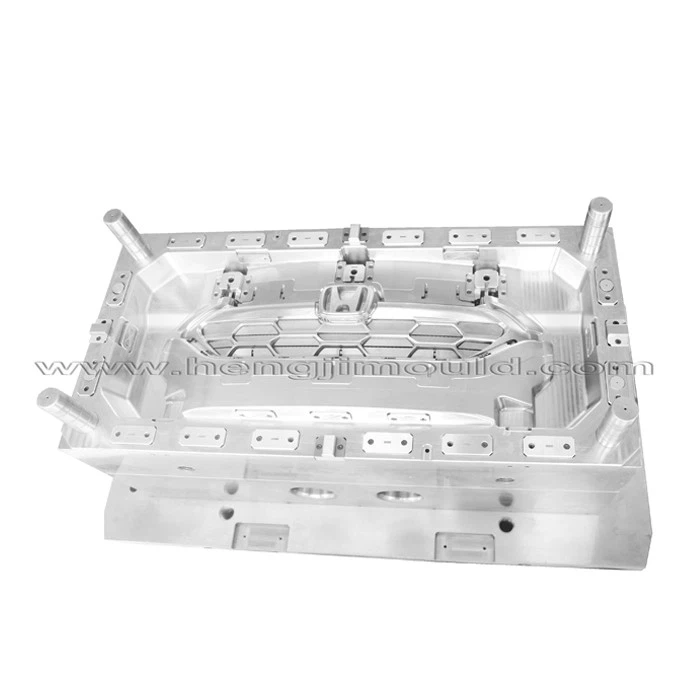
- Grille Injection Mould: Grille Injection Mould is used in the injection - molding process to produce grille parts. The accuracy of the mould is crucial. ISO 286 - 1 is used for the tolerances on linear and angular dimensions of parts. This standard helps us ensure that the grille injection mould can produce parts with the correct dimensions, reducing the number of defective products.
Contact Us for Procurement
If you're in the market for high - quality grille moulds that meet international standards, we'd love to hear from you. Our team of experts is ready to assist you with your specific requirements. Whether you need a custom - designed grille mould or a standard - sized one, we have the experience and capabilities to deliver the best solutions. Contact us today to start the procurement process and discuss how we can meet your needs.
References
- ISO 9001:2015, Quality management systems — Requirements
- ISO 14001:2015, Environmental management systems — Requirements with guidance for use
- ASTM D638, Standard Test Method for Tensile Properties of Plastics
- ASTM D790, Standard Test Methods for Flexural Properties of Unreinforced and Reinforced Plastics and Electrical Insulating Materials
- JIS B0401 - 1, Geometric product specifications (GPS) — Surface texture: Profile method — Nominal characteristics
- JIS Z2241, Method of tensile test for metallic materials
- ASTM G154, Standard Practice for Operating Fluorescent Ultraviolet (UV) Lamp Apparatus for Exposure of Nonmetallic Materials
- ISO 286 - 1, Geometrical product specifications (GPS) — Linear sizes of parts — Part 1: Bases of tolerancing, concepts, general principles and rules


